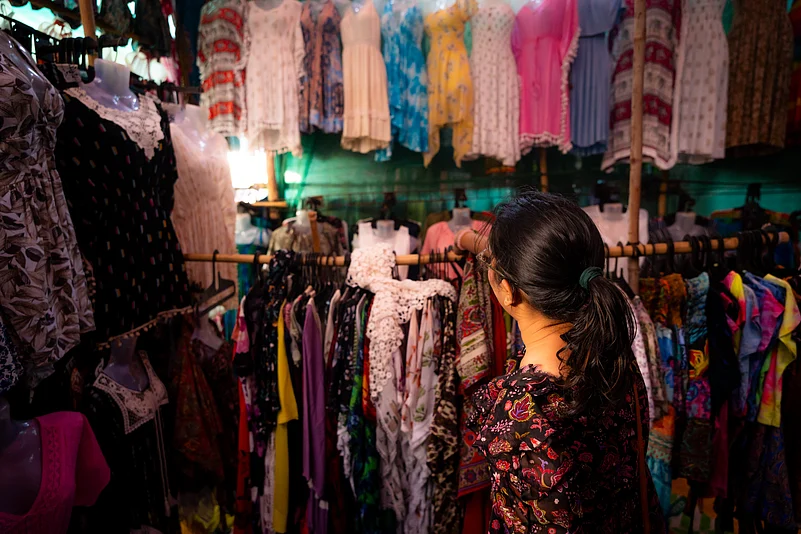
Let’s be real. As someone who champions thrifting, I thought I was a “conscious” consumer. But my closet was getting crowded, my wallet felt lighter, and a low-grade hum of “I need something new” was constantly playing in the background. Even secondhand shopping can become a reflex, not a necessity.
So, I decided to hit the reset button. I committed to a “No-Buy” Month—a full 30 days of purchasing zero clothing, accessories, or shoes. No thrift stores, no online resale apps, not even a cheeky pair of socks. It wasn’t about punishment; it was about rediscovery. Here’s what I learned.
The Difference Between a “Want” and a “Need” Became Crystal Clear
A week into my no-buy, I found the perfect vintage Levi’s jacket online. My finger hovered over “Buy,” my heart raced with FOMO. But the rules forced me to pause and ask a critical question: “Do I need this, or do I just want the thrill?” The answer was clear. I already hadtwo jackets. Closing that app felt more empowering than any purchase. Read more about this mindset in /the-difference-between-a-want-and-a-need.
My Triggers Were Everywhere—And I Had to Face Them
I used shopping as an emotional band-aid for boredom, stress, or celebration. The no-buy rule forced me to find real solutions: a walk, a friend, a book. I had to sit withmy feelings instead of numbing them with a transaction—uncomfortable, but revealing.
Was It Worth It? Absolutely
A No-Buy Month isn’t a permanent solution for everyone, and indeed, that’s not the point. Instead, it serves as a powerful reset button. Additionally, it’s a mindfulness practice that bleeds into other areas of your life.
I’m not on a strict no-buy anymore, but my relationship with shopping has fundamentally changed. Now, I’m more intentional, more grateful, and much, much pickier. Consequently, when I do walk into a thrift store, it’s with a clear purpose, not a fog of want. Ultimately, that, my friends, is the true art of the No-Buy.