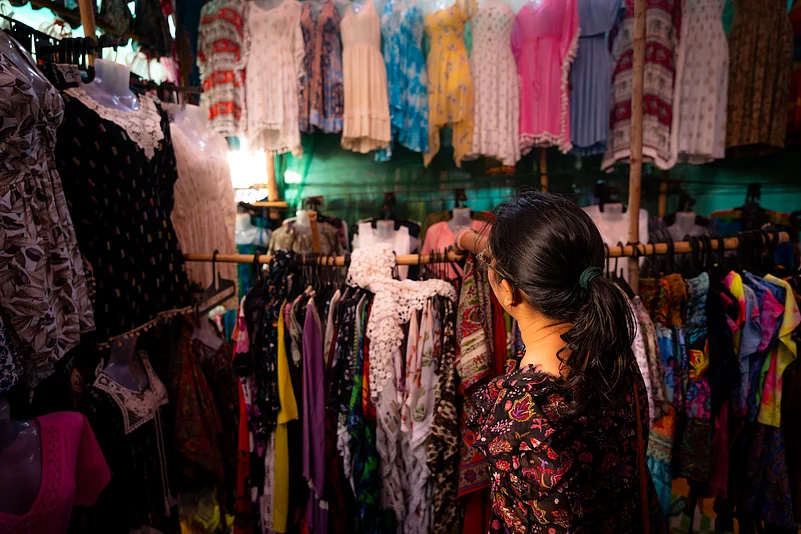
As a fashion student, my world revolves around fabrics, colors, and creative exploration, mood boards. Moreover, I’m constantly immersed in the world of garment creation, learning everything from textile science to construction techniques. Consequently, the more I learn, the more one truth becomes crystal clear. We won’t find the future of fashion in brand-new, mass-produced garments. Instead, it’s waiting on the racks of my local thrift store.
Here’s what I’ve realized on my journey. Every single day, millions of tons of clothes are discarded, ultimately ending up in landfills. Meanwhile, in design classes, our professors teach us to see the potential in every piece of material. which is why it honestly hurts to watch people discard so much wearable fabric simply because trends have shifted. Therefore, when I choose a thrifted piece, I’m not just shopping; rather, I’m giving a beautifully crafted garment a second chance at life. In fact, it’s my first act as a designer—recognizing its inherent value, honoring its craftsmanship, and committing to a more sustainable approach.
Furthermore, this practice inspires me to experiment creatively: I can mix and match eras, thereby creating a style that is genuinely mine—all while living out the sustainable values I deeply believe in. Ultimately, each thrifted piece I choose reinforces a philosophy of conscious consumption and mindful design.
The Staggering Hidden Cost of a Simple Tee
The statistics from my textile studies are staggering. Did you know that producing one simple cotton T-shirt requires over 2,700 liters of water? That’s enough for one person to drink for two and a half years! As someone who works intimately with fabric, that number is overwhelming. Thrifting is our most powerful tool to bypass that entire resource-intensive production process. We’re not just saving money; we’re saving literal rivers.
My Thrift Store, My Creative Playground
For me, thrifting is the ultimate form of creative expression. It’s how I build a wardrobe that is utterly unique. I can deconstruct a vintage 70s blouse and use its silk to accent a modern jacket I’m working on. I can mix and match eras, creating a style that is genuinely *mine*—all while living out the sustainable values I believe in.
Fighting Fast Fashion with a Secondhand Stitch
The fast-fashion industry, which education often critiques, builds its model on overproduction and disposability. But in reality, thrifting helps us slow down. It teaches us to value quality, history, and craftsmanship over sheer quantity. It’s the breathing example of a circular economy we talk about in our theory classes—a system where nothing is waste, and everything is a resource.
A Thoughtful New Fashion Philosophy
So, as I sit here sketching my next project, surrounded by bolts of deadstock and rescued fabric, in that moment, my philosophy is set. The future of fashion isn’t fast; it’s thoughtful.
Next time you’re about to click “add to cart” on something new, I challenge you to pause. And ask yourself the same question I do every day:
Can we thrift it instead?
Source: /https://www.unep.org/